

TodaysHeadlines

Economic News

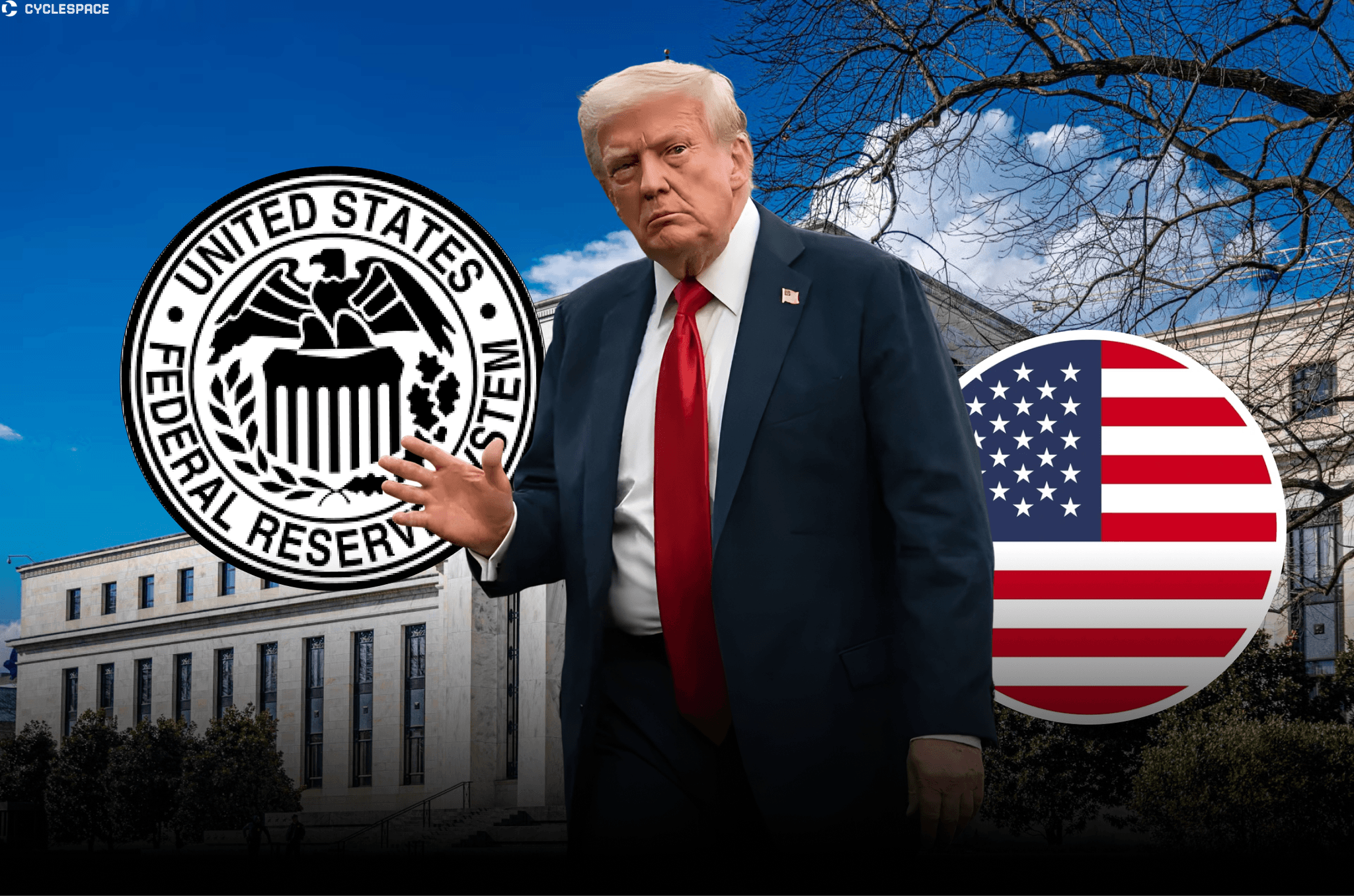
Trump's Call for 1% Interest Rates in 2026 Sets Up Showdown with the Federal Reserve

Title Image
Cyclespace Exchange

Cyclespace Exchange

Dec 13, 2025, 04:45 PM

Key Takeaways

  • 1

    Presidential Demand:

    President Donald Trump publicly stated that he believes the Federal Reserve's benchmark interest rate should be lowered to 1% or lower by 2026

  • 2

    Fed Disconnect:

    This demand is sharply at odds with the current median Federal Reserve projection, which calls for the rate to be in the 3.5%-3.75% range by the end of 2025 and indicates only one additional cut in 2026.

  • 3

    Monetary Policy Threat:

    The comments intensify concerns over the independence of the U.S. central bank, especially ahead of Chairman Jerome Powell's term expiring in May 2026.

  • 4

    Crypto Implications:

    A move to ultra-low rates (1%) would be highly bullish for risk assets like cryptocurrencies, drastically increasing liquidity and making high-growth, high-risk investments more appealing relative to low-yield bonds.

  • 5

    Inflation Risk:

    Analysts warn that achieving a 1% rate in 2026 without a severe recession would likely require ignoring persistent inflation risks, potentially leading to a renewed surge in consumer prices.

WASHINGTON D.C. — President Donald Trump has reignited the high-stakes political battle over U.S. monetary policy, asserting that he expects the Federal Reserve's benchmark interest rate to fall to 1% or lower by the end of 2026. The aggressive target, made in recent public remarks, positions the White House in direct opposition to the independent central bank's current economic projections and has immediately fueled market speculation.

The comments come at a critical juncture. The Federal Open Market Committee (FOMC) recently delivered its third consecutive rate cut, lowering the federal funds rate to the 3.5%-3.75% range. However, the accompanying "dot plot" revealed a deeply divided committee, with the median forecast pointing to only a single additional quarter-point cut for all of 2026—a pace far more measured than the President's demand.

The significance of this latest call is amplified by two factors:

  1. Powell's Successor: Federal Reserve Chair Jerome Powell's term is set to expire in May 2026. President Trump has been highly critical of Powell and is expected to nominate a successor who is more inclined toward aggressive rate cuts. Candidates like former White House economic advisor Kevin Hassett, who is reportedly a frontrunner, are seen by analysts as being more supportive of the administration's low-rate agenda.
  2. Conflicting Data: The Fed's dual mandate—stabilizing prices and maximizing employment—is currently facing conflicting signals.While the labor market has softened in recent months, with rising unemployment, the Fed's preferred inflation gauge (PCE) remains elevated above the 2% target, partly due to the pass-through effects of the administration’s new tariffs. To slash rates to 1% would require either a catastrophic economic collapse or the abandonment of the inflation fight.
Head Image

📊Deep Dive Analysis

The Impact on Risk Assets and Crypto

The prospect of a 1% interest rate environment—a return to near-zero levels last seen during the COVID-19 pandemic and the post-2008 financial crisis era—has major implications for the entire financial landscape, especially for the high-growth, high-risk crypto sector.

  • Massive Liquidity Boost (Bullish): Ultra-low rates flood the financial system with cheap credit and liquidity. This cheap money often seeks higher returns, flowing directly into risk assets such as technology stocks and cryptocurrencies like Bitcoin and Ethereum. As high-yield traditional investments disappear, the appeal of assets with potentially high appreciation, regardless of volatility, increases dramatically.
  • The De-Dollarization Narrative: Analyst Antje Praefcke of Deutsche Bank has warned that if a Trump-appointed Fed Chair cuts rates aggressively despite persistent inflation, the U.S. Dollar could face significant downward pressure. A weakening dollar is historically seen as a net positive for fixed-supply, alternative reserve assets like Bitcoin, reinforcing its narrative as a hedge against fiat currency devaluation.

📊Conclusion

Balanced Perspective and Risk

While a 1% rate appears highly bullish for crypto, this scenario is fraught with significant economic risks.

The Fed's current projections for 2026 see inflation cooling to 2.4%. For the central bank to justify a 1% rate, inflation would need to be near its 2% target, or the economy would have to be in a severe recession.


  • Inflation Surge: If the Fed bows to political pressure and cuts rates prematurely while inflation remains sticky, the result could be a loss of central bank credibility and a sharp re-acceleration of consumer prices. This "stagflation" scenario—high inflation paired with stagnant growth—is toxic for consumers and often leads to dramatic, unpredictable volatility in financial markets.Market Disappointment: Investors are already pricing in at least two rate cuts for 2026, which is more dovish than the Fed’s own forecast of one cut. If the economic data does not support the President’s 1% call, and the Fed is forced to hold rates higher for longer, a rapid adjustment of market expectations could trigger a sharp sell-off in growth and risk assets, including crypto.
  • Market Disappointment: Investors are already pricing in at least two rate cuts for 2026, which is more dovish than the Fed’s own forecast of one cut. If the economic data does not support the President’s 1% call, and the Fed is forced to hold rates higher for longer, a rapid adjustment of market expectations could trigger a sharp sell-off in growth and risk assets, including crypto.