

TodaysHeadlines

Trending

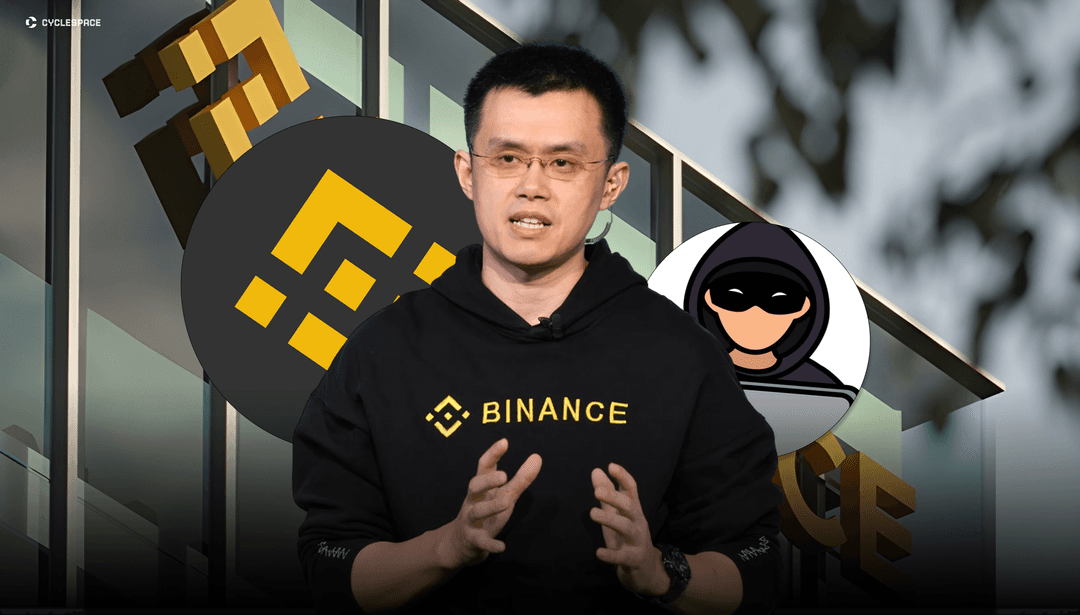
Binance Flags New "Self-Orchestrated" Fraud Tactic Targeting Customer Support

Title Image
Cyclespace Exchange

Cyclespace Exchange

Jan 1, 2026, 11:30 AM

Key Takeaways

  • 1

    Gaslighting Support:

    Binance has uncovered a sophisticated "self-orchestrated" scam where users fabricate chat logs and screenshots to mislead support teams into believing they were defrauded by official staff.

  • 2

    AI & Deepfake Integration:

    The warning coincides with an industry-wide surge in AI-powered "vishing" (voice phishing), where deepfake audio mimics real Binance executives to trick users into compromising their API settings.

  • 3

    The API Threat:

    A primary goal of these support-themed scams is to manipulate users into enabling "Withdrawal Permissions" on their API keys, bypassing standard security checks.

  • 4

    No Phone Support Policy:

    Binance has reiterated that it does not provide unsolicited phone support and will never ask for passwords, 2FA codes, or fund transfers via calls or private messages.

  • 5

    Enhanced Verification:

    To combat fabricated evidence, Binance is shifting toward requiring live, real-time video screen-sharing for complex support claims to verify the authenticity of chat histories.

MAHÉ, SEYCHELLES — Binance, the world’s largest cryptocurrency exchange by volume, has issued an urgent security alert regarding a novel fraud tactic designed to "gaslight" its customer support infrastructure. In a disclosure released early this week, the exchange detailed a "self-orchestrated" scam attempt where a malicious actor combined real employee profiles with fabricated chat logs to demand compensation for a non-existent security breach.

The incident marks a significant shift in the cat-and-mouse game between exchanges and fraudsters. While traditional phishing aims to steal user credentials, this new tactic attempts to exploit the exchange's own internal recovery and support systems by creating a false narrative of platform-side negligence.

The Mechanics of "Self-Orchestrated" Fraud

The recently flagged scam involved a user who claimed to have been defrauded by a senior Binance executive on Telegram. Upon investigation, Binance security teams discovered several high-tech red flags:

  • Hybrid Fabrication: The scammer used the authentic profile details of a real Binance employee but paired them with fake, simplistic chat logs created via third-party "screenshot generator" tools.
  • The "Deleted Message" Excuse: When asked for live proof or to scroll through the chat history in a real-time video, the user claimed the messages were "deleted in privacy mode," a common tactic used to explain away the absence of authentic data.
  • Self-Transfers as "Theft": On-chain analysis revealed that the "stolen" funds were actually moved to a wallet controlled by the user themselves, intended to simulate a loss that the exchange would supposedly be liable for.
Head Image

📊Deep Dive Analysis

Expanded Context: The Rise of AI Impersonation

This specific "gaslighting" tactic is part of a broader, more aggressive trend in 2025 and 2026: AI-driven impersonation.

Binance CEO Richard Teng has previously warned of "Deepfake Security Calls," where attackers use AI to mimic the voices and accents of real representatives. These scammers often use "number spoofing" to make the call appear as if it is coming from an official helpline. By establishing a professional, calm tone, they build enough trust to guide users into making "security updates"—which, in reality, involve lowering API restrictions to allow unauthorized withdrawals.

Informed Analysis: The 'So What' for the Industry

The emergence of these tactics suggests that the "low-hanging fruit" of basic phishing (sending a fake link) is becoming less effective due to improved user education. Consequently, fraudsters are moving toward institutional-level social engineering.

  • Operational Strain: For exchanges, this means the cost of customer support is skyrocketing. Each claim now requires a deeper forensic dive into on-chain data and metadata, as screenshots can no longer be trusted as primary evidence.
  • Trust Erosion: As scammers become better at impersonating staff, the barrier for legitimate users to get help increases. The "friction" added to support—such as requiring video verification—is a necessary but frustrating evolution in the DeFi era.
  • API Security as the New Frontier: The focus on API manipulation highlights a shift in targets. Attackers are no longer just looking for your login; they are looking for "permissions" that allow them to drain accounts programmatically, which is often harder for automated risk systems to flag as "unusual" in real-time.

📊Conclusion

Risk & Security Context: How to Protect Your Assets

Binance has provided a clear set of "Golden Rules" to navigate this heightened threat environment:

  1. Use Binance Verify: Before trusting any website, email, Telegram ID, or phone number, check it against the official Binance Verify tool.
  2. No Passwords/2FA on Calls: No legitimate Binance representative will ever ask for your password, 2FA code, or to move funds to a "safe wallet" for verification.
  3. API Lockdown: Ensure your API keys have "IP Whitelisting" enabled and "Withdrawal Permissions" disabled unless strictly necessary for a specific bot or service.
  4. Report the "Self-Scam": If you are approached by someone offering to help you "trick" the exchange for a refund, be aware that you are likely being lured into a secondary scam where they will steal your data while promising a payout.

As AI continues to lower the barrier for high-quality impersonation, the mantra for crypto users in 2026 remains: Verify, don't trust—and never scroll for support on social media.